

Arsenal’s Summer Is About Power, Not Progress
Arsenal’s Summer Is About Power, Not Progress and this summer there will be some difficult decisions that may split the fanbase and create a different view of where Arsenal will progress next season.
David Hole
4/10/2026
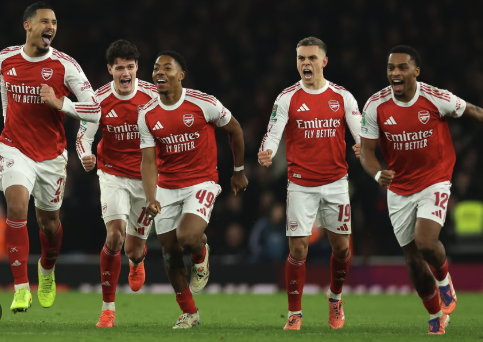
The here and now has altered the stakes
For Arsenal, everything is now framed by the present tense.
Seven games from a first league title in 22 years. Within touching distance of a Champions League semi-final. This is no longer a project searching for validation—it is one operating at the sharp end of elite competition.
And that changes the question.
For years, the conversation around Mikel Arteta centred on progress: could he rebuild, could he compete, could he close the gap? That debate has been settled. The metrics—points totals, European consistency, structural cohesion—are all pointing in one direction.
Yet the paradox is simple: reaching the top does not ease pressure. It intensifies it. Because now, the demand is not to arrive—but to stay.
Performance has earned leverage—but also scrutiny
There is no serious argument that Arsenal have not improved under Arteta. The trajectory is clear and sustained. Title challenges have become expected rather than aspirational. Champions League runs are no longer fleeting. That matters in the context of what comes next.
Arteta is no longer building credibility—he is operating from a position of strength. And strength, in elite football, brings leverage.
However, leverage cuts both ways.
The closer you get to success, the more every decision is magnified. Marginal gains decide outcomes. Squad depth becomes decisive. Recruitment errors become more costly because they are measured against trophies, not progress charts.
This is where Arsenal now live. Against that backdrop, Arteta’s contract situation takes on greater significance.
On the surface, it is straightforward: a manager entering the final year of his deal, with both parties reportedly keen to extend. But that framing undersells the moment.
This is not about paperwork. It is about alignment.
Arteta’s influence at Arsenal is unusual in the modern game. He operates with a level of control—across recruitment, culture, and tactical identity—that few coaches in Europe enjoy. That has been earned through delivery.
The question now is whether the club will match that level of ambition. Financially, his current package places him below the very top tier of European managers. That gap is not just about money—it is about status and recognition. More importantly, it is about guarantees: what backing will be provided, what risks will be taken, and how aggressively Arsenal intend to pursue sustained success.
So, what is really being negotiated here?
Not just a contract—but the terms of Arsenal’s next phase.
The “pure profit” dilemma — strategy or short-termism?
If the contract defines direction, player trading will define execution. The reported willingness to listen to offers for Myles Lewis-Skelly and Ethan Nwaneri is telling. Not because of who they are individually, but because of what they represent.
Academy players sit differently on the balance sheet. Their sale is recorded as pure profit. In a world shaped by financial controls and squad cost rules, that is powerful.
But it comes with trade-offs. Selling elite young talent to fund first-team upgrades is efficient. It accelerates competitiveness. Yet it also raises uncomfortable questions about identity and sustainability.
Are Arsenal transitioning into a club that monetises its academy to compete in the market?
Or can they balance internal development with external recruitment?
There is no clean answer. But the decision will signal intent.
Decisions like these do not exist in isolation. They carry messages.
To young players, the signal is clear: progression is possible, but not guaranteed. Opportunity is contingent on immediate impact.
To senior players, the message is equally direct: the club is prioritising the present. The margin for patience is narrowing.
That shift is not inherently negative. In fact, it often accompanies elite success. But it must be managed carefully.
Because culture—one of Arteta’s strongest achievements—can be undermined as quickly as it is built if messaging becomes inconsistent.
Unlike previous summers, Arsenal are not looking to rebuild. They are looking to refine.
The identified targets—a versatile full-back, a central midfielder, a left-sided attacker—point to a squad being shaped for flexibility and resilience rather than overhaul.
This is what elite teams do. They solve specific problems. Yet the market rarely cooperates so neatly.
Opportunities emerge. Situations evolve. And Arsenal may find themselves forced into reactive decisions—particularly if significant outgoings create both financial space and tactical gaps. You only have to look at the Eze situation, where a player became available who Arsenal had the chance to snap up. They took it and look at the effect Eze has had on key parts of the season.
The key will be discipline. Because at this stage of development, one misstep does not just slow progress—it risks regression. Underpinning all of this is a tension that Arsenal have not fully resolved. They have spent heavily. They have grown commercially. They have re-established themselves in the Champions League. But they are not operating with the same financial model as some of their competitors.
Which raises the central question: how far are they willing to go?
Balancing the books through player sales is prudent. It aligns with regulatory frameworks. But it also limits flexibility. And at the very top, flexibility is often the difference between competing and winning.
This is where ownership comes into focus—not in rhetoric, but in action. It is tempting to view this season as a culmination. It is not. Even if Arsenal lift the Premier League trophy, the work does not end. If anything, it accelerates. Because success resets expectations. The standards rise. The scrutiny sharpens. The tolerance for stagnation disappears. That is the paradox Arteta now faces.
He has taken Arsenal back to the top table. Now he must prove they belong there—year after year.
This summer will not determine whether Arsenal are a good team. That is already established. What it will determine is whether they are prepared to act like a club that expects to stay at the top. Contract alignment. Strategic sales. Targeted recruitment. Financial commitment. These are not separate conversations—they are parts of the same decision.
And that decision is ultimately about power.
Not the power to improve—but the power to sustain, to dominate, and to endure. At this level, that is the only question that matters.