

Arteta has nowhere to hide
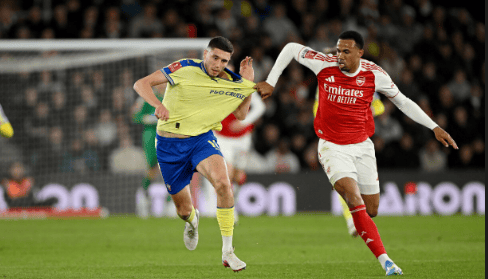
Arsenal’s 2-1 defeat at Southampton on Saturday was not merely a bad afternoon in the FA Cup. It was a reckoning. A quarter-final loss to a Championship side, coming on the back of defeat in the Carabao Cup final, has stripped away the comforting language that often protects elite teams in modern football. Rotation. Prioritisation. Managing the load. Keeping the squad fresh. At some stage, those phrases stop sounding strategic and start sounding like excuses. This felt like that stage.
David Hole
4/7/20265 min read
Southampton defeat exposes Arsenal’s domestic cup failure and leaves Arteta with nowhere to hide
Arsenal’s 2-1 defeat at Southampton on Saturday was not merely a bad afternoon in the FA Cup. It was a reckoning. A quarter-final loss to a Championship side, coming on the back of defeat in the Carabao Cup final, has stripped away the comforting language that often protects elite teams in modern football. Rotation. Prioritisation. Managing the load. Keeping the squad fresh. At some stage, those phrases stop sounding strategic and start sounding like excuses. This felt like that stage.
The facts are stark enough on their own.
Arsenal arrived at St Mary’s as overwhelming favourites and left beaten 2-1.
Ross Stewart gave Southampton the lead, Viktor Gyökeres restored parity in the second half, and Shea Charles struck late to send the hosts into the semi-finals.
Arteta himself pointed to the poor way Arsenal conceded both goals, while outside reporting noted criticism of his team selection and the wider sense that Arsenal’s season had suddenly narrowed from multiple possibilities to two remaining fronts: the Premier League and Champions League.
That is the immediate match verdict. The larger issue is what this defeat tells us about the way Arsenal have treated the two domestic cups all season.
Supporters are not stupid. They can tell the difference between going out because the opponent was better and going out because a competition never truly sat at the centre of the club’s emotional commitment.
The sense around Arsenal this year has been unmistakable: the real focus has always been the Champions League and the Premier League. That may make sense inside a boardroom presentation or an internal performance model. It makes far less sense to supporters who pay premium prices and still expect Arsenal Football Club to compete properly for every major trophy placed in front of it.
That is where the frustration sharpens into something more serious. Fans have been let down, not just by a result, but by the hierarchy of importance that the result appears to confirm.
Of course, every elite side prioritises. Nobody is naïve about squad management. But there is a difference between managing competitions and emotionally downgrading them. Arsenal’s exit at Southampton, coming so soon after the Carabao Cup final loss to Manchester City, reinforces the suspicion that the English cups were ultimately viewed as inconvenient rather than essential.
The language after these games does not help either. It becomes about recovery, learning, fuel for the bigger prizes ahead. Yet if two trophies are discarded in the service of two others, then one of those remaining prizes now has to be won. Otherwise the sacrifice was not strategic. It was simply wasteful.
The Southampton game itself offered evidence of that broader carelessness. Arsenal had moments, chances and periods of control. But they also made the sort of sloppy, passive mistakes that good cup sides do not make in hostile away ties. Ben White misjudged the situation for the first goal. Arsenal were loose in possession in dangerous areas. Their response after going behind lacked force for long periods. Even the equaliser did not produce the authority you would expect from a team supposedly on the brink of major honours. Southampton, to their credit, played with belief and conviction. Arsenal played like a side assuming its quality would eventually be enough. In cup football, that is often fatal. It was fatal here.
And this is where the conversation must move to Arteta.
He deserves credit for rebuilding Arsenal into a side that is consistently relevant at the top end of the game. That part is undeniable. He inherited a mess and has restored standards, structure and competitiveness. However, elite management is not judged only by improved aesthetics, higher points totals or admirable process. It is judged by silverware. Arsenal are no longer in the phase where “progress” alone can be sold as a sufficient return. Not after the money spent. Not after the time invested. Not with a squad of this size. Not with expectations now fully reset toward major honours.
That does not mean one bad week should erase everything Arteta has done well. It does mean the margin for empty-handed seasons has disappeared.
The paradox is simple. Arteta has elevated the club to the point where excuses are no longer available to him. If Arsenal finish this campaign without a trophy, the questions around his position will intensify for entirely rational reasons. That would not be hysteria. It would be the consequence of modern elite football. Extensive summer spending, a strong squad, and years into the project create obligations, not merely hopes. At that point, “nearly” starts to sound like failure.
To be clear, the claim that his managerial career at Arsenal is on the line is an opinion about pressure, not a statement of club policy. There is no public evidence that he is facing dismissal today. But the political reality of football management is obvious enough: when resources are high and returns are low, patience shortens. If Arsenal fall short in both the Premier League and the Champions League after effectively allowing the domestic cups to drift away, Arteta will enter dangerous territory.
I personally think the league is won if Arsenal beat Bournemouth at the weekend, 12 point clear and six games to go (one at the Etihad) even with Man City's two games in hand I think is too much too lose... but as my Dad used to say "Stranger things have happened at Sea" and if the unthinkable happens then it will be a tough sell in the summer to think that we have the right people at the helm to move forward.
That is why Southampton matters so much. Not because the FA Cup alone defines the season, but because it reveals the risk in Arsenal’s chosen approach. The club has acted as though the league and Europe are the only prizes worthy of full concentration. Fine. But if that is the gamble, then one of those prizes has to be delivered. The supporters have effectively been asked to accept domestic disappointment as the cost of chasing bigger glory. They are entitled to ask what happens if the bigger glory never arrives.
And that is the concluding truth Arsenal cannot avoid. Saturday’s defeat was not just an upset. It was a warning about the dangers of selective ambition. When I saw the teamsheet, I knew what was coming, not the defeat but the performance that would follow.
Cups should not be distractions when you have lost the habit of perpetually winning. They are how winning habits are built, how pressure is normalised, how seasons are validated, and how supporters are rewarded.
Arsenal treated both English cups like afterthoughts, and in doing so they have narrowed the definition of success to two brutal objectives.
Win the Premier League. Win the Champions League. Miss both, and this season will not be remembered as a noble focus. It will be remembered as a miscalculation that left fans short-changed and left Mikel Arteta staring at the harshest question in elite football: after all this time, all this money and all this control, where is the trophy?