

Four Trophies: From Possibility to Pressure
Is it possible to win everything in a season, probably not but clubs have come close and clubs with nowhere near the depth of squad of the current Arsenal team.
David Hole
3/3/20264 min read

Let’s remove the romance first.
Winning the League Cup, FA Cup, Champions League and Premier League in one season is structurally hostile to modern football reality. The calendar compresses, injuries accumulate, and knockout variance punishes minor errors. Historically, seasons collapse not because teams lack quality, but because they lack resilience across formats.
Yet after Sunday’s 2–1 victory over Chelsea at the Emirates, the conversation shifts from fantasy to architecture.
Because what we saw was not aesthetic dominance. It was structural competence under pressure.
And that matters far more in March than beauty.
Set-Pieces as Competitive Insurance
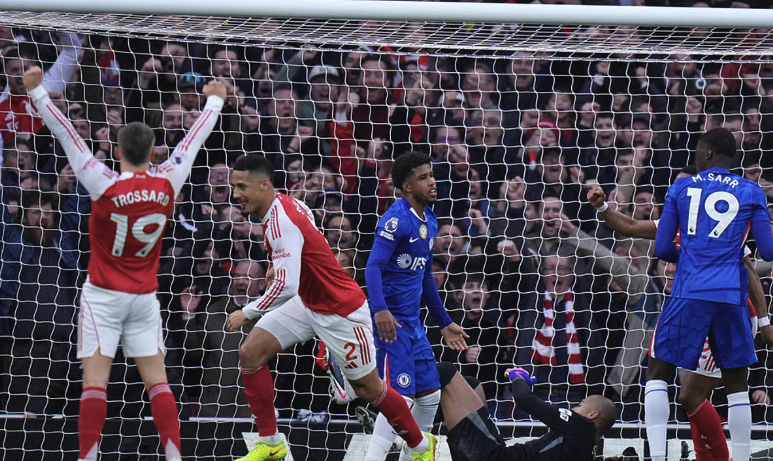
Arsenal beat Chelsea through two trademark corners. Not improvisation. Not chaos. Rehearsed superiority.
The opener came in the 21st minute: Saka’s delivery, Gabriel heading back across goal, Saliba’s intervention forcing a deflection off Sarr. The second decisive moment came from Declan Rice’s corner, Timber rising to score what proved the winner — Arsenal’s 16th goal from a corner this Premier League season.
Sixteen.
That figure equals the most by any side in a single Premier League campaign (alongside Oldham 1992-93, West Brom 2016-17, and Arsenal themselves in 2023-24).
This is no longer a useful strength. It is a defining identity.
We analysed earlier how Arsenal’s set-piece superiority creates psychological leverage . Sunday reinforced it. Chelsea knew the threat. They prepared for it. They still couldn’t stop it.
And when you are competing across four competitions, repeatable scoring mechanisms become oxygen. You cannot rely on open-play fluency every three days. You need structural insurance.
Arsenal now possess it.
Winning Without Rhythm
This was not Arsenal’s best performance.
Chelsea grew into the game after going behind. They equalised via a corner of their own — Hincapié’s flick into his own net from a Reece James delivery — and began the second half stronger. Raya was required to produce high-level saves. The stadium felt tense.
That is precisely the point.
Potential champions win games that feel unstable.
Timber’s 66th-minute header restored control. When Martinelli broke on the counter and Pedro Neto cynically brought him down — earning a second yellow and reducing Chelsea to ten men — Arsenal did not overextend. They managed the game.
Even when Liam Delap bundled in what appeared a late equaliser, VAR intervened correctly for offside in the build-up.
There was no collapse. No emotional drift.
Just three points.
The League Table Reality
The win moves Arsenal to 64 points, five clear of Manchester City — albeit having played a game more.
This is not abstract optimism. It is scoreboard fact.
City had reduced the gap to two points with victory at Leeds. Arsenal responded immediately. Title races are psychological contests as much as tactical ones. Immediate response matters.
And look at the run-in context.
Arsenal’s April–May league sequence contains winnable home fixtures around the pivotal Etihad visit. City’s own run-in contains multiple away tests and little margin for fatigue. That does not guarantee anything — but it makes the title race structurally live.
Depth becomes decisive here.
Rotation in the FA Cup against Mansfield.
Energy preservation before Champions League ties.
A Wembley final against City in the League Cup on 22 March.
This is not chaos. It is sequencing.
Champions League: Leverkusen and Game-State Maturity
The draw against Bayer Leverkusen adds complexity, but not panic.
Two-legged European ties punish naivety. In prior eras, Arsenal would dominate territory and concede transition goals. That fragility has reduced.
Sunday’s Chelsea game was instructive in miniature: Arsenal did not need 65% possession to win. They needed control of moments.
Leverkusen will test rest defence and midfield screening. They will press in waves. But Arsenal’s physical dominance at corners and structured defensive shape travels into Europe.
You do not need to dominate 180 minutes. You need to dominate the right 25.
This Arsenal side looks increasingly capable of that.
The FA Cup and the Value of Professionalism
Mansfield away is the sort of tie that historically creates complacency headlines.
This squad should treat it as oxygen management.
Rotate intelligently. Preserve spine players. Maintain set-piece threat. Avoid emotional overreach.
The difference between a romantic cup run and a sustainable one lies in professional discipline. The Chelsea match showed Arsenal can grind under pressure. That trait must now extend to lower-profile fixtures.
The League Cup Final: Psychological Leverage
On 22 March, Arsenal face Manchester City at Wembley.
That fixture now carries amplified significance.
If Arsenal lift the League Cup, they do more than win silverware. They remove narrative tension. They enter the Champions League quarter-final window with tangible reward secured.
And the way they are scoring goals — through rehearsed corners and aerial superiority — is precisely how tight finals are often decided.
City remain formidable. But Arsenal will not walk into Wembley hoping. They will walk in structured.
Secondary Effects: Discipline as Destiny
Chelsea’s seventh Premier League red card of the season underlines something critical about elite competition: discipline is structural, not incidental.
Pedro Neto’s dismissal changed the game state. Arsenal did not need to exploit chaos; they simply needed to avoid self-inflicted damage.
Four competitions demand emotional control. Yellow cards. Rotations. Game management. Substitution timing.
Sunday was not a masterclass. It was maturity.
And maturity sustains campaigns.
Institutional Readiness
There is a final layer here.
Competing on four fronts requires more than talent. It requires alignment — sports science, rotation planning, recruitment profile, physical robustness.
Arsenal’s squad is tall, powerful, tactically literate, and increasingly comfortable winning ugly.
For years, the debate was about whether Arteta’s project could reach elite consistency. Now the debate shifts: can it convert structural readiness into historic output?
That is progress.
Conclusion: A Window, Narrow but Genuine
Let’s be clear.
The quadruple remains improbable. It requires health, marginal officiating fortune, and sustained composure through March and April congestion.
But after beating Chelsea 2–1 — not beautifully, but effectively — Arsenal sit:
Five points clear at the top.
In a domestic cup final.
In the FA Cup with a manageable draw.
In the Champions League with a navigable Round of 16 tie.
With the most potent corner routine in the league.
That combination has not existed at Arsenal for a generation.
This is no longer about dreaming of four trophies.
It is about recognising that the architecture now supports the attempt.
And when architecture aligns with opportunity, history stops sounding absurd.
It starts sounding possible.