

How Arsenal’s Standards Are Being Quietly Rewritten
There is a shift coming in how Arsenal will be discussed, judged and ultimately remembered in this era. It will not be announced with headlines or panel debates, but it is already taking shape beneath the surface of the football conversation. Arsenal are moving from a club mocked for “never winning anything” to one that will soon be told that winning once is not enough.
David Hole
2/7/20265 min read
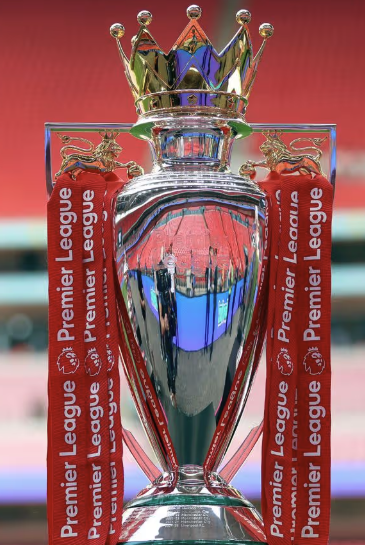
From “Never Win a Cup” to “Do It Again”: How Arsenal’s Standards Are Being Quietly Rewritten
There is a shift coming in how Arsenal will be discussed, judged and ultimately remembered in this era. It will not be announced with headlines or panel debates, but it is already taking shape beneath the surface of the football conversation. Arsenal are moving from a club mocked for “never winning anything” to one that will soon be told that winning once is not enough.
That transition matters. Because it exposes how success is framed, who controls the narrative, and how quickly standards are rewritten once a club threatens the established order.
For years, Arsenal’s charge sheet was simple: progress without prizes is meaningless. Second place was failure. Near-misses were excuses. The absence of silverware was used as proof of fragility, softness, and ultimately inferiority. Now, as trophies edge closer and the rebuild matures, the narrative is preparing to pivot. The next accusation will be more subtle, but more demanding: prove it again. And then again. And again.
This is how football history is shaped — not just by what is won, but by how often you are told it counts.
The Convenience of the “Weak Era” Argument
When Arsenal do secure a major trophy under Mikel Arteta, one argument is already being quietly assembled: that it came in a diluted era.
You can hear the outlines of it forming. Competition wasn’t what it used to be. Rivals were in transition. The league lacked true giants at their peak. Squad size and depth mattered more than pure quality. Financial disparity distorted the landscape. It will not be phrased as bitterness; it will be framed as context.
Yet this argument is deeply selective.
Manchester United have been in transition for over a decade. Liverpool are exiting one of the most intense managerial cycles in modern English football. Chelsea have dismantled and rebuilt themselves multiple times in pursuit of an identity. Manchester City remain dominant, but even they operate within the margins of squad management and regulatory scrutiny. This is not an unusually weak era — it is a volatile one.
And volatility is not a gift. It is a test.
Winning in chaos requires systems, not moments. It demands recruitment coherence, tactical clarity, psychological resilience and institutional alignment. Arsenal did not stumble into this position because others declined; they built into it while others burned cycles.
To reduce that achievement to circumstance is to misunderstand how modern elite football actually works.
Squad Size, Sustainability, and the New Reality
One of the most disingenuous refrains likely to emerge is that Arsenal benefited from a league overly influenced by squad depth.
As if that were not the defining challenge of contemporary football.
The Premier League is no longer a 14-man competition. It is a 22-man ecosystem shaped by relentless scheduling, European commitments, international tournaments, and injury risk. Squad building is not an accessory; it is the game.
Arsenal were punished for years for lacking depth. Now they are criticised for having it. That is not analysis — it is outcome-based framing.
This is the modern paradox: you are told depth is essential until you build it, at which point it is used to diminish your success.
Arteta, Time, and the Exception Nobody Else Gets
Perhaps the most revealing part of this entire discussion is the one rarely addressed honestly: Mikel Arteta would not have been afforded this time anywhere else.
Six seasons without a major trophy would be intolerable at most elite clubs. At Real Madrid, Bayern Munich, PSG, Juventus, or even Manchester United, the project would have been reset multiple times. Arsenal chose continuity over churn, belief over panic.
That decision will one day be praised in theory while dismissed in practice.
Because once success arrives, the same voices that questioned Arteta’s legitimacy will reframe the story as inevitability. “Of course it worked — he was backed.” “Of course they won — he was given time.” As if time itself is not the rarest commodity in elite football.
The truth is less comfortable: Arsenal accepted short-term ridicule to pursue long-term competence. That does not make the eventual success easier; it makes it harder to contextualise for those who rely on managerial drama as content.
Sky Sports, Narrative, and the Burden of Proof
No organisation has more influence over how Arsenal are framed than Sky Sports. Not because of malice, but because of reach.
For years, the mantra was relentless: Arsenal flatter, Arsenal fade, Arsenal fall short. The language became habitual. “Mentality.” “Bottle.” “When it matters.” These phrases were not arguments; they were shortcuts.
Even as Arsenal finished second — twice — the tone rarely shifted. Second place was not progress; it was failure rebranded. The bridesmaid tag stuck because it was useful. It kept Arsenal in a permanent state of conditional legitimacy.
Now comes the more dangerous phase.
When Arsenal win a cup, the demand will escalate instantly. One will not be enough. Two will be coincidence. Three will be “sustained”. The bar will move because the narrative requires movement. Sky cannot pivot overnight from scepticism to reverence without undermining years of framing. So instead, it will raise the entry criteria for greatness.
This is not unique to Arsenal. But Arsenal are uniquely exposed to it because of how long the “nearly” label has been allowed to harden.
Second Place and the Weight of Nearly
Finishing second is football’s most uncomfortable achievement. It proves competence while denying validation. It invites scrutiny rather than praise. And once it happens more than once, it becomes identity.
Arsenal now carry that weight.
Two second-place finishes will be used as evidence of consistency or fragility depending on the agenda of the speaker. For rivals, it is proof that Arsenal fall short. For pundits, it is proof that pressure tells. For Arsenal supporters, it is proof that the margins are closing.
The problem is that history rarely remembers second place kindly unless it is followed by dominance. That is the trap Arsenal are approaching.
The bridesmaid tag is not removed by one trophy. It is removed by repetition.
The Coming Reframe: From Underdog to Incumbent
This is the key inflection point.
Arsenal have benefited, in some respects, from being framed as challengers. As builders. As learners. That grace period is ending. Once silverware arrives, Arsenal will no longer be judged on trajectory but on defence of status.
That is when the conversation hardens.
Every early exit will be magnified. Every second-place finish will be framed as regression. Every season without a trophy will be treated not as context but as failure to consolidate.
This is how “greatness” is policed.
The clubs remembered as defining an era are not those who broke through once. They are those who made winning boring. Predictable. Expected.
That is the challenge Arsenal are stepping into — whether they like it or not.
Why Arsenal Will Have to Win Again, and Again
To be considered one of the great teams of this era, Arsenal will have to do what history always demands: repeat success in hostile conditions.
They will need to win when rivals are stronger, not weaker. They will need to win when expectations are suffocating, not liberating. They will need to win when the narrative is actively searching for their decline.
One trophy will be framed as timing. Two will be framed as momentum. Three will finally be framed as authority.
That is not fair. But fairness has never governed football memory.
Conclusion: The Price of Being Taken Seriously
Arsenal are approaching the most difficult phase of their journey — not the climb, but the validation.
The football world will not meet their success with relief or admiration. It will meet it with conditions. With caveats. With raised bars. The conversation will shift from “can they do it?” to “how often can they do it?”
That is the price of relevance.
Arsenal have spent years being told that progress without trophies means nothing. Soon, they will be told that trophies without repetition mean the same.
To escape that cycle, Arsenal will not just need to win. They will need to normalise winning. They will need to turn scepticism into resignation.
And only then — quietly, grudgingly — will the conversation change.
Not because the narrative wanted it to.
But because it had no other choice.