

Mind the Gap
Tottenham Hotspur dismissed Mauricio Pochettino that month, ending a five-year project that had taken them to a Champions League final and established them as credible disruptors of England’s traditional hierarchy. Arsenal, drifting under Unai Emery, would sack their own head coach weeks later. Both clubs were unsteady. Both were uncertain. Both faced a choice.
David Hole
2/11/20264 min read
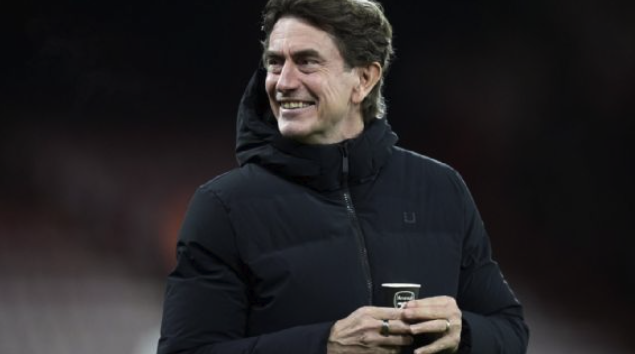
Mind the gap, how Spurs have fallen 7 years behind The Arsenal.
November 2019 feels both distant and uncomfortably recent.
Tottenham Hotspur dismissed Mauricio Pochettino that month, ending a five-year project that had taken them to a Champions League final and established them as credible disruptors of England’s traditional hierarchy. Arsenal, drifting under Unai Emery, would sack their own head coach weeks later. Both clubs were unsteady. Both were uncertain. Both faced a choice.
Seven years on, with Spurs now dismissing Thomas Frank and scanning the managerial horizon once again — with Roberto De Zerbi’s name already predictably circulating from Marseille — the contrast between the two North London institutions is stark.
The divergence was not emotional. It was structural.
When Pochettino departed Spurs, the club’s identity fractured overnight. His tenure had been built on developmental coaching, aggressive pressing, and emotional connection. But fatigue had set in. Investment stalled. The squad aged unevenly. Results dipped.
Across North London, Arsenal were suffering from a different but related ailment: strategic incoherence. Arsène Wenger’s departure had left cultural residue but no modern sporting architecture. Recruitment was fragmented. Authority blurred.
Both clubs were wounded.
The difference lies in what followed.
Tottenham chose serial correction. Arsenal chose systemic overhaul.
Tottenham’s Carousel: Style Before Structure
Spurs’ appointments since 2019 read like philosophical oscillation.
José Mourinho — elite pragmatism, trophy-first control.
Nuno Espírito Santo — transitional placeholder.
Antonio Conte — authoritarian intensity.
Ange Postecoglou — expansive front-foot football.
Thomas Frank — structured adaptability and data-informed pragmatism.
Each hire arrived as a reaction to the previous failure. Each embodied a stylistic pivot rather than a continuation. That is not accidental. It reflects an institutional model that prioritised the appointment itself as the solution.
The manager became the strategy.
And when results inevitably dipped — as they always do in elite football — the reset button was pressed again. Different ideology. Different language. Different tactical blueprint. The underlying power structures, however, remained largely untouched.
The effect? Cultural drift.
Players recruited for Conte’s vertical transitions were asked to invert into Postecoglou’s positional rotations. Recruitment logic shifted with managerial personality. Leadership language evolved season to season. Continuity never had time to compound.
Spurs did not lack ambition. They lacked alignment.
Arsenal’s response in December 2019 was superficially similar: a former captain appointed head coach. Sentiment and symbolism were present. But what followed distinguished it.
Arteta was not installed as a standalone visionary. He was embedded within a reshaped sporting hierarchy. Recruitment strategy shifted toward age profile and technical adaptability. Data and analytics were integrated into scouting. Cultural messaging — discipline, standards, collective responsibility — was unified from academy to first team.
It was not smooth. Arsenal finished eighth twice. Results fluctuated. Criticism was fierce.
Yet the club resisted reflex.
Instead of changing ideology with each downturn, Arsenal doubled down on structural clarity. The sporting director role evolved. Decision-making centralised. Recruitment aligned to a defined style of play rather than the personality of the moment.
The coach became part of the system — not its sole pillar.
That distinction has compounded over time.
Thomas Frank’s Exit: A Symptom, Not the Cause
Thomas Frank’s dismissal this week is less about his individual competence and more about Tottenham’s recurring pattern.
Frank is intelligent, structured, and tactically flexible. But he inherited the same structural ambiguity that his predecessors navigated. Without a fully coherent sporting hierarchy above him — one that defines long-term identity independent of managerial mood — even strong coaches struggle to create enduring direction.
Tottenham’s commercial operations are elite. Stadium revenue, global branding, financial sustainability — these are strengths.
But footballing coherence requires something different: patience tied to infrastructure.
Sacking Frank may address immediate performance anxiety. It does not automatically resolve strategic fragmentation.
Roberto De Zerbi’s name rising to the top of Spurs’ shortlist is entirely predictable.
He represents clarity of playing philosophy. Build-up bravery. Tactical identity. He is articulate, modern, and aesthetically aligned with how Spurs supporters imagine their club.
But here lies the central question: would De Zerbi be a foundation stone or another stylistic swing?
If Spurs appoint him without simultaneously redefining the sporting director’s remit, recruitment pipeline, performance analytics structure, and leadership accountability, the cycle risks repeating. Attractive football without institutional ballast eventually destabilises.
Arsenal’s lesson is instructive here.
Arteta succeeded not because he was a romantic former captain, nor because of tactical diagrams alone. He succeeded because the club recalibrated around him — and because he accepted being part of a broader executive framework.
The coach did not sit above the structure. He operated within it.
Infrastructure Before Ideology
Tottenham in 2026 stand at the same crossroads Arsenal faced in 2019.
They can appoint De Zerbi, rebrand the football, and hope identity emerges organically. Or they can undertake the harder, less glamorous work of institutional redesign.
That means:
Clear separation of commercial and sporting authority.
A recruitment strategy anchored in long-term stylistic principles.
Performance departments aligned from academy to senior squad.
A leadership culture that tolerates short-term turbulence in pursuit of systemic consistency.
Arsenal’s transformation did not arrive overnight. It was iterative. At times uncomfortable. But crucially, it was layered.
When Arsenal now recruit, it feels intentional. When they endure setbacks, they do so without existential crisis. There is architectural confidence.
Tottenham, by contrast, still feel episodic.
There is also a behavioural dividend to coherence.
Players at Arsenal understand role clarity. Recruitment aligns with tactical expectation. Development pathways are visible. Mistakes occur, but they do not trigger ideological upheaval.
At Spurs, by contrast, uncertainty filters downward. Each managerial shift reopens evaluation cycles. Senior players recalibrate. Recruitment hesitates between profiles. The squad becomes transitional rather than evolutionary.
The paradox is that Tottenham’s resources are superior to Arsenal’s in 2019. Yet resources without framework produce volatility.
Structure reduces noise.
Conclusion: Rebuild or Rebrand?
Seven years ago, Arsenal and Tottenham occupied similar emotional territory: frustrated, restless, uncertain of direction.
Today, one club operates with strategic layering. The other continues to rotate faces in search of identity.
Thomas Frank’s departure is not an isolated event. It is the continuation of a pattern. Roberto De Zerbi may well be the next chapter. He may even succeed.
But success without structural redesign risks being temporary.
Arsenal’s overhaul after 2019 was not merely a managerial appointment; it was an infrastructural recalibration from the coach down to leadership functions, recruitment philosophy, and cultural standards. It required patience. It required humility. It required accepting that the manager alone is not the solution.
Tottenham now confront the same truth.
The choice is stark.
Rebuild the system — or rebrand the touchline.
History suggests that only one of those options compounds into sustained relevance.