

Set-piece again Ole Ole — underpinning Arsenal’s threat
Arsenal’s performance in the Carabao Cup semi-final first leg at Stamford Bridge last night reinforced a growing tactical reality across English football: dead-ball situations have become not just an ancillary source of goals, but a strategic weapon that can define and decide big matches. Arsenal’s opener — a Ben White header from a Declan Rice corner — underlined the potency of set plays and the broader psychological impact they now exert on opponents.log post description.
David Hole
1/16/20264 min read
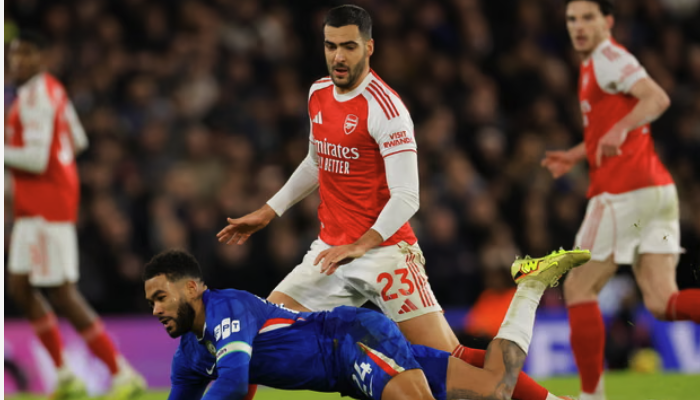
Arsenal’s performance in the Carabao Cup semi-final first leg at Stamford Bridge reinforced a growing tactical reality across English football: dead-ball situations have become not just an ancillary source of goals, but a strategic weapon that can define and decide big matches.
Arsenal’s opener — a Ben White header from a Declan Rice corner — underlined the potency of set plays and the broader psychological impact they now exert on opponents.
Set-piece again Ole Ole — underpinning Arsenal’s threat
Arsenal are the Premier League’s most effective set-piece team. According to Sky Sports analysis, Arsenal currently top the league in set-piece goals, a trend that has intensified under Arteta’s leadership and the influence of specialist coach Nicolas Jover.
Historical context further emphasises this trend: since the 2023/24 season, Arsenal have amassed an exceptional total of goals from corners — well above any other Premier League side — reinforcing both consistency and durability in this phase of play.
This statistical superiority is not an accident. Arsenal’s routines combine precision delivery from Rice and Saka, intelligent aerial movement, and targeted runs designed to create “chaos” in defensive ranks — a deliberate tactical choice that consistently stretches and disorganises opposition marking schemes.
One factor that appears lost on any TV pundit at the moment is how many of Arsenal's players are 6 feet 2 or taller. This physical advantage allows Arsenal to dominate in the air both defensively and offensively.
Saliba is 6ft 4, Mosquera 6ft 3, Ben White 6ft 1, Big Gabby 6ft 3, Calafiori 6ft 2, Merino and Rice are 6ft 2 with Havertz at 6ft 4 and 6ft 2 inch Gyökeres making for a sizeable team. This height advantage gives them a significant edge in winning aerial duels and set pieces and is even more stark when you realise that apart from a couple of names they are usually on the field at the same time.
Transforming fear into tactical leverage
What differentiates Arsenal’s dead-ball execution from most rivals is not merely the frequency of goals, but the fear factor it generates. Teams now concede corners and free-kicks in dangerous areas with an almost palpable sense of trepidation because they have seen Arsenal score in those situations. This has multiple strategic effects:
Opponents tighten their defensive lines at corners, often over-committing bodies into zones that Arsenal exploit with well-timed flicks and anticipatory runs.
Defending teams hesitate slightly in aerial duels, as tracking both zonal assignments and individual threats becomes cognitively complex.
Coaches structure training around minimising conceded set pieces — an admission of Arsenal’s influence on preparation, even beyond open-play tactics and thus concede possession in the process instead.
In last night’s match, the White header not only provided an early lead but served as a psychological marker: Arsenal are conditioned to believe a dead-ball can create decisive advantage. Chelsea’s preparation can focus on open play all they like, but Werner’s corner-derived concession reaffirmed Arsenal’s reputation as a set-piece nemesis
The paradox of corner defending — and the holding debate
However, the increasing strategic emphasis on corners has led to an unintended consequence: an excessive buildup of holding and physicality before deliveries. This phenomenon is visible in both club and international matches and reflects how teams try to impede Arsenal’s runners and aerial targets.
There is a growing trend — across Premier League fixtures and highlighted in recent tactical debates — where defenders engage in what could only be described as attempted assault, impeding attackers before the referee blows for the corner. This holding is often blatant: arms across hips, shirts tugged, bodies anchored in ways that clearly contravene Laws 12 and 13 of the game. While rarely punished, this has become pervasive enough to merit commentary from pundits and coaches alike.
From a perspective of sporting integrity, this trend must be stopped, as it is fast becoming comical. It's all very well watching Ben White throw Cucurella into the goal at the Emirates last season, but why do obstruction rules not count at corners but do count in free play in the centre circle needs to be addressed.
A tactical element should focus on skill and preparation, not on survival through sustained minor fouls. The current state — where defenders effectively cling to attackers until the ball is swung in — reduces the contest to brute force rather than athleticism and tactical intelligence.
The Premier League and associated European Leagues need to address this with greater consistency. Not only is it against the laws of the game, but it also distorts competition: attackers are denied a fair chance to compete, and spectators see a wrestling match on average every 5 mins. The paradox is stark: the very effectiveness of a club's set-piece strategy incentivises opponents to infringe — yet this undermines the quality and fairness of set-piece contests.
Conclusion — a tactical edge that reshapes matches
Last night’s Carabao Cup clash was a microcosm of Arsenal’s broader dead-ball evolution. Their corner proficiency — quantified by league-leading set-piece goals and defined by clinical execution — is now a strategic asset that opponents must prepare for week in, week out.
Yet the accompanying rise in pre-delivery holding threatens to undermine the legitimacy of set-piece contests. For the game’s custodians, enforcing existing rules with rigour is essential if the tactical ingenuity of teams like Arsenal is to flourish fairly.
In the context of elite competition, Arsenal’s set pieces are not just a method of scoring: they are a psychological lever, forcing opponents to adapt their defensive identity and continually recalibrate tactical priorities. This meta-impact — the fear inspired and the structural adjustments it prompts — is evolving into one of the defining characteristics of their season.