

Small Margins
A title run-in is rarely decided by the grand things supporters remember first. It is not always the sweeping tactical plan, the stirring speech, or even the headline scoreline. More often, it is decided by the little things. A boot stud on an ankle that is not punished.
David Hole
3/17/20265 min read
The Inches That Move a Title Race
A title run-in is rarely decided by the grand things supporters remember first. It is not always the sweeping tactical plan, the stirring speech, or even the headline scoreline. More often, it is decided by the little things. A boot stud on an ankle that is not punished. A shot that catches the outside of the post instead of the inside. A clearance made half a second earlier than it needed to be. A stoppage-time lapse that turns two points into none, or one into three. That is where seasons bend. That is where titles begin to tilt.
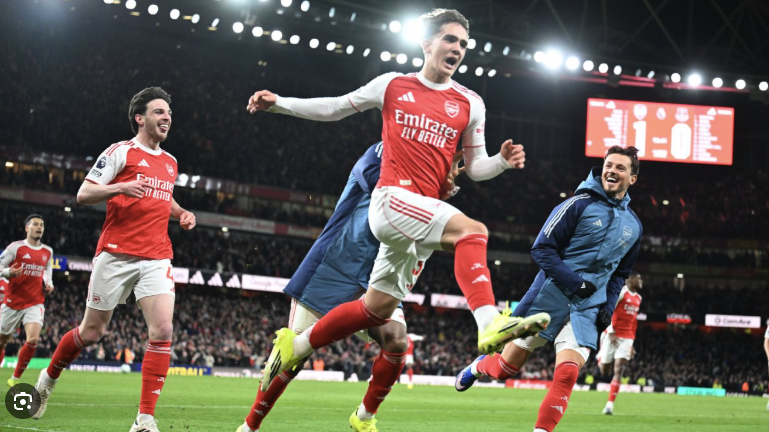
Arsenal’s 2-0 win over Everton at the weekend was a near-perfect example. The final score looks comfortable enough if you read it cold. The reality was anything but. Everton threatened, Dwight McNeil struck the post, and Arsenal were left furious when Kai Havertz was denied a first-half penalty after Michael Keane appeared to tread on the back of his foot. Sky’s Jamie Redknapp called the non-award “a disgrace,” and whatever one thinks of pundit language, the central point was hard to dispute: it looked like a moment that should have gone Arsenal’s way and did not. Yet instead of folding into grievance, Arsenal found the breakthrough in the 89th minute through Viktor Gyökeres before Max Dowman’s stoppage-time goal sealed it.
That matters because title races are not won by teams who only prosper when everything is clean and fair and comfortable. They are won by sides who can absorb the irritation of moments going against them without letting those moments poison the game. Everton could easily have been 1-0 up if McNeil’s effort had been an inch further inside. Arsenal could have had a penalty and a different route to control. Instead, they spent most of the afternoon in that maddening territory between dominance and frustration. The significance is not merely that they won. It is that they kept believing the game would eventually yield.
That same pattern was there at Brighton. Arsenal won 1-0 at the Amex on 4 March, and it was not one of those performances built for montages or nostalgia. It was a proper away win. Hard-edged. Narrow. Slightly attritional. Arsenal’s official report noted that it was their 14th clean sheet in 30 league games, their best total at that stage of a top-flight season since 2005/06. That is not decorative information. It goes to the heart of why they are where they are. When the title race tightens, every team talks about mentality. But mentality in football is often just organisation sustained under pressure. It is defenders doing ugly things well, repeatedly, without applause.
And that, in truth, is where championship arguments become real. Arsenal’s back line has given them the platform to survive the days when fluency is absent. Brighton away was one of those days. Everton at home, until the late burst, was another. The glamour of title challenges tends to focus on attacking stars, but the doggedness of the defence often determines whether the campaign still has oxygen by spring. Arsenal have conceded only 22 goals in 30 league matches and have kept those 14 clean sheets. That is not a side living on hot finishing streaks or luck alone. That is a side built to remain in matches long enough for the decisive touch to arrive.
However, the margins do not always fall kindly, and Wolves away remains the warning inside this run. Arsenal led 2-0 at Molineux and still failed to win, conceding in stoppage time when Tom Edozie’s effort struck the post and went in despite Riccardo Calafiori’s attempt to keep it out. That draw turned a position of comfort into a lesson. The point is not simply that Arsenal dropped two points. It is that title races are littered with these tiny reversals: one clearance not completed, one rebound not controlled, one final phase not managed. The same season that can feel charmed in one week can feel vulnerable in the next.
So, what changes whether those moments consume you or merely test you?
Discipline is a large part of the answer.
Arsenal have zero Premier League red cards this season. Last season, they finished with six, the highest total in the division. That contrast is enormous. It is not just a statistical tidiness point. It alters the texture of matches. An 11-man side can keep executing the plan. A 10-man side starts negotiating survival instead. The Premier League’s own analysis earlier in the 2024/25 season showed Arsenal took just two points from the first three league matches in which they received a red card, after taking a maximum 15 from the first five in which they kept 11 players on the pitch. By season’s end, Arsenal’s own review recorded six red cards and 21 points dropped from winning positions across the league campaign. Not all of those dropped points were caused by dismissals, of course, but the damage done by disorder was obvious.
This season the picture is different. Arsenal remain top, with the Premier League noting they moved nine points clear of Manchester City after beating Everton, albeit having played a game more. Their defensive record is strong, their discipline is controlled, and the emotional volatility that red cards invite has been largely removed from the equation. That is not a minor tweak. It is one of the hidden reasons the run-in feels sturdier than it did a year ago. When a team stops handing chaos an invitation, it gives itself a far better chance of letting quality decide matters instead.
The paradox is that title races can look huge from a distance and microscopic when you are inside them. Supporters will remember the big games and the league table screenshots. But the lived reality is much smaller than that. It is the width of McNeil’s shot against Everton. It is the Havertz penalty appeal that vanished in seconds. It is a line of defenders at Brighton refusing to yield. It is the stoppage-time blow at Wolves that could still matter if Arsenal make this harder than it needs to be. It is also the absence of self-inflicted wounds, especially the red cards that distorted too much of last season.
That is why the run-in should not be discussed only in terms of pressure or bottle or destiny. Those words are easy. They flatter pundits and simplify football. The truth is more demanding. Titles are won by teams who manage the tiniest swings of fortune better than everybody else. Sometimes that means surviving injustice. Sometimes it means defending with stubborn precision. Sometimes it means learning from the one that got away. Arsenal’s season, at this stage, looks like a campaign being shaped by exactly those details. And if they do go on to win the league, it will not only be because of the spectacular moments. It will be because, in the end, they handled the smallest ones best.
And this is the uncomfortable truth that sits beneath all of it: margins are not loyal. The same inches that currently fall in Arsenal’s favour can just as easily tilt the other way. A shot that clips the inside of the post instead of the outside, a marginal offside that goes unpunished, a defensive line that hesitates rather than holds — these are not hypotheticals, they are inevitabilities over a ten-game run. The question is not whether those moments will arrive, but how Arsenal respond when they do.
Because if the fine details begin to turn against them — if discipline slips, if chances stop being taken, if concentration wavers at the edges — then the narrative of control can unravel quickly into one of regret. Title races are not won by avoiding these swings; they are won by absorbing them without collapse. And that, ultimately, is the next test: not whether Arsenal can benefit from the margins, but whether they can survive when those same margins begin to bite back.